



Host: Thank you for joining us in the virtual salon of "Overseas Perspective". Would you mind giving us a brief introduction about yourself?
Guest Lin Fei: I'm Lin Fei, Chairman of the Guangdong Prepared Cuisine Industry Development Center of North America. I'm currently living in Canada. I'm engaged in the promotion of Chinese prepared food brands, mainly to help Chinese prepared food enterprises in Guangdong with market research, brand promotion, and the establishment of distribution channels.
Host: Can you share with us when you were first engaged in prepared food? Some people say it is a product of "exceptional circumstances" and question its development potential. What is your opinion?
Guest Lin Fei: I began exploring prepared food two years ago. Back then, I had a lot of doubts, mainly from the perspective of consumers. But as I learned more about this industry, I've come to realize that prepared food is really a great thing. Throughout its rapid development, the Guangdong model and the Guangdong experience have played an indispensable role.
As the living standards improve, we have raised our expectations for food. We all expect food to be more convenient and safer. The process of preparing a Chinese dish can be complicated, but with the development of the "Stay-at-Home Economy" in recent years, simplified Chinese dishes have become essential for each family. After all, none of us wants to spend our entire day in the kitchen after getting up. From the perspectives of the industry and the sector, achievements, including the enhancement of the food development technology, the wide application of the flash-freezing preservation technology, and the development of infrastructure, such as the extensive highway system and the world-leading cold chain transportation technology and warehousing and logistics systems, have opened up significant opportunities for prepared food to reach households swiftly.
Thanks to the prepared food, the value of food has been substantially widened. Moreover, prepared food has contributed to a lot of innovative combinations and more extensive and faster distribution of fruit in the south and vegetables in the north. Also, prepared food can better guarantee food safety. For example, when it comes to fish, if it is consumed at home, perhaps only 60% of it can be used. But if it is made into a prepared dish, the consumption rate can be enhanced to 80% or 90%, or even higher.
The essence of the prepared food industry lies in the management of supply chains. Specifically, a huge consumption market and well-developed supply chains have laid a solid foundation for the rapid development of prepared food in China. At present, the market has widely reached a consensus that China's Chinese prepared food industry will soon grow to a scale of RMB1 trillion.

Host: You have been introducing and promoting prepared Cantonese dishes in Canada since you went there. You have also said that "Canada is expected to become the first choice for the international expansion of prepared Cantonese dishes". So, what has made you think so?
Guest Lin Fei: I've been living and working in Guangzhou for nearly two decades, so I have a deep understanding of Guangdong. When living in Canada, I also pay close attention to the eating and consumption habits of locals. During the last two years, Canadians have been plagued by "food inflation". The co-founder of a food delivery platform once told me that, as shown by the data of their platform, an international student spent at least CAD50 (equivalent to nearly RMB300) on food delivery on average every day. When I did the market research, a lot of local consumers complained that food expenditure accounted for an increasing proportion of their total household expenditures. This inspired me to systematically introduce Chinese prepared food, particularly prepared Cantonese dishes, to Canada and even the entire North America.
Why prepared Cantonese dishes? That's because although the prepared food industry in China has hit a scale of hundreds of billions yuan over the last two years, Guangdong is undoubtedly the industry leader. When I carried out marketing, a lot of distributors were confused about what some dishes had to do with Guangdong since they are Sichuan, Hunan, Zhejiang, or Jiangsu cuisine. I said that these products were developed by branded enterprises from Guangdong. People in Guangdong are fearless and creative trailblazers. When dealing with Chinese prepared food enterprises, I found that many of them led the industry in terms of cuisine development, freshness preservation techniques, safety requirements, and brand and market awareness. High quality is the prerequisite and even the decisive factor for marketing. When I marketed crayfish here, a friend from the local catering industry told me that he had tried all crayfish available in the US, including those prepared by restaurants, but the best were still those prepared by the brand we worked with. Indeed, this brand is from Guangdong.
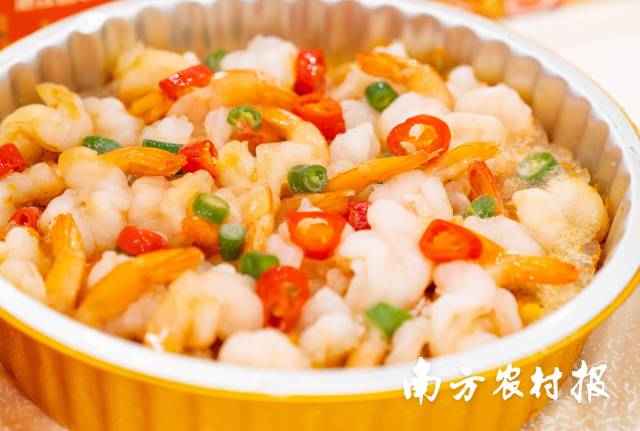
As for Canada, North America is the world's largest food consumption market. Moreover, North America has a large population of overseas Chinese, so Chinese food is very popular there. In Canada, especially Toronto and Vancouver, as Chinese people account for a high percentage of the population, there are many Chinese restaurants, which are at the forefront of the North American market in terms of culinary skills. Canada is a highly diverse country where people from diverse backgrounds seamlessly integrate. This has presented both challenges and opportunities for the innovation of Chinese prepared food. We're not only targeting the overseas Chinese market but also capturing the taste buds of Westerners, particularly with items like steamed stuffed buns. Therefore, finding a way into the Western market is where we should invest more effort.
Host: Here is a concern that has been on consumers' minds. Some people, who primarily are parents and professionals in the catering industry, have commented online that Chinese prepared food is "harmful" and should be boycotted. This concern stems from consumers' anxieties about food safety and additives. What is your opinion about this?
Guest Lin Fei: Concerning this issue, I believe I'm in the right position to speak. When I was in China, I surveyed employees of some prepared food enterprises as well as officers from regulatory authorities. As far as I can gather, such stereotypes about prepared food primarily result from unfamiliarity with the production processes and technology involved. For example, many people are under the impression that preserving prepared food requires the addition of numerous additives and even preservatives. But actually, leading prepared food enterprises tend to use liquid nitrogen that allows flash freezing, sterilization, and freshness preservation throughout the production and transportation processes. Moreover, cold chain transportation requires maintaining the temperature below -18°C throughout the process, and the additives used exceed neither the quantity specified in the list of ingredients nor the regulatory limits. Moreover, the food that we refer to as "prepared food" has a history of six decades in developed countries, including the US and Japan. We can find that a lot of food available for sale in European and American food supermarkets, except for vegetables, fruits, and meat, is prepared. Common Asian favorites, such as pizza, wraps, fried chicken, menchi-katsu or fried meat cake, spring rolls, pasta, fried rice, shumai, and dumplings, are also prepared food. Convenient ready-to-eat food that we can simply heat in the microwave or oven has freed up a lot of time that we used to spend on cooking. We can say that prepared food is an inevitable product of the progression of society.
As for restaurants, statistics showed that 70% of restaurants in China were using prepared dishes. Many people believe that restaurants only need to reheat the prepared dishes, which, in my opinion, is a misconception. The statistics are broad. Actually, we should take the "prepared" level into consideration. If half-finished products, including side dishes, are uniformly processed before food preparation, the efficiency will be substantially increased, and the quality can be guaranteed. So, from this point of view, prepared food is more hygienic and safer. In Canada, where labor costs are high, some restaurant chains have adopted central kitchens, by which the dishes prepared are also prepared food. However, small and medium restaurants cannot afford such central kitchens, so they need to figure out how to utilize prepared food, what kind of prepared food they should use, and how to develop prepared food that suits their brands and consumer bases. Concerning the production and development of prepared food, the core is how to preserve the dishes and maintain their mouthfeel. At the prepared Cantonese dishes promotion conference held in Toronto early this year, the prepared Cantonese dishes were highly praised by Canadians who had tried them. In their opinion, the prepared food was even more delicious than the dishes made by restaurants. When it comes to the question of how to authentically introduce Chinese culture and Chinese flavors into foreign markets, I think Chinese prepared food is the epitome.
Host: What suggestions do you have for prepared Cantonese dish enterprises who want to export their offerings? What support can you provide for them?
Guest Lin Fei: Food and culture are intertwined. Different countries and ethnic groups have different food requirements. Many Chinese favorites do not appeal to foreigners, such as the limbs, organs, and heads of animals (e.g., chicken feet, duck necks, and goose heads). Also, there are differences in how certain foods are consumed. For example, when it comes to fish, Westerners typically prefer fillets. Moreover, it is unacceptable for Westerners that the table is messy and filled with bones. Behind this are profound cultural differences. If we do not understand, we may easily take the wrong path and even encounter obstacles. So, to develop products that cater to the needs of locals, we must understand these differences and then build channels.
Besides, logistics can be another challenge because deeply processed prepared food tends to have a shorter shelf life. For example, Amazon is very strict with logistics management. It adopts batch control for food and beverages to ensure the remaining shelf life lasts at least 90 days. When transported to Amazon's operating center, products that will expire in less than 50 days will be marked and disposed of and will not be returned to the sellers. Therefore, to minimize the risks, manufacturers should have stable channels and production and distribution networks. Moreover, ESG challenges (i.e., environmental, social, and corporate governance challenges) are faced by manufacturers. Their environmental sustainability and corporate governance environment will affect the market expansion of their brands.
In terms of distribution channels, a lot of prepared food exporters in China are OEM companies, which is harmful to brand marketing in the long run. After all, the brands, channels, and pricing power belong to others, even though the products are good and sell well. Therefore, establishing an overseas distribution system for independent brands, in the long run, is an essential path for brands' international expansion.
Breaking into the Canadian market can be challenging, but if you make it, you will be benefited for long. Canadians are loyal and conservative. Once selecting a brand, they will be loyal for their entire life. If they recognize a restaurant, even several future generations will dine there. So, you will have a stable and reliable market as long as your products are recognized by them and are free of quality issues.
Currently, the biggest challenge facing many Chinese prepared food enterprises in expanding into foreign markets is to get relevant certification, which is a lengthy and slow process involving many stringent requirements. However, without certification, enterprises cannot gain a presence in the Canadian market. In this regard, we can help enterprises aspiring to get established overseas do research and planning. We can also provide information services to them so that they can obtain the certification as soon as possible. Meanwhile, channel establishment is challenging. As I just mentioned, for an OEM company, it is impossible for this company to have its own channels, even if the brand has settled in Costco and T&T Supermarket. This has increased the competition pressure and challenges faced by OEM companies in China. Not every brand is capable of building its own sales teams overseas. So, in this regard, the Guangdong Prepared Cuisine Industry Development Center of North America is trying to help domestic customers build their own sales systems. By doing so, more Canadians will be able to enjoy delicious and diversified convenient Chinese prepared food.
Host: Chairman Lin Fei, thank you again for answering our questions in terms of the definition and the safety and export policies of prepared food. I hope this section will be helpful for you. If you have any question or interesting topic, feel free to leave a comment below. See you next time!
Guest Lin Fei: See you, my friends!
【Host】 Bao Rui
【Source】 World Rural Affairs section of Southern Rural Post